
- Mindora Pulse
Table of Contents
What Causes Tooth Decay? The 8 Root Causes Explained
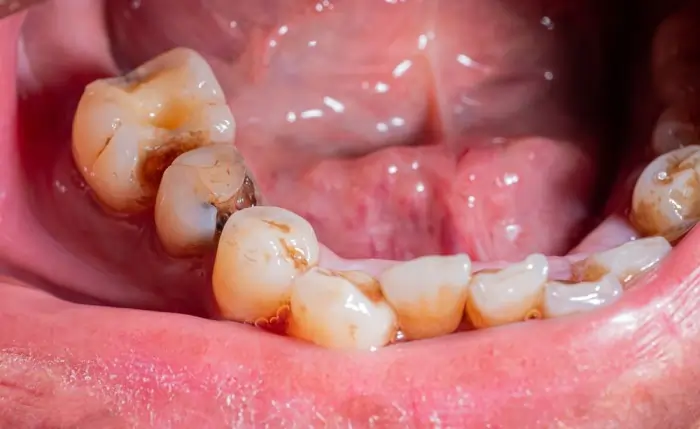
Tooth decay is caused by acid-producing bacteria in your mouth that feed on sugars and attack your tooth enamel. But bacteria are just the starting point. Dry mouth, a high-sugar diet, certain medications, vaping, acid reflux, and even stress all play a role. Understanding the full picture – not just the sugar-and-bacteria story – is how you actually prevent it.
This guide breaks down all eight causes of tooth decay, explains the biology behind each one, and tells you what you can do about them. If you’ve been told you’re ‘cavity-prone’ despite brushing regularly, one of these lesser-known causes may be the reason why.
Why Tooth Decay Happens: The Core Mechanism
Tooth decay begins when oral bacteria – mainly Streptococcus mutans – metabolize fermentable carbohydrates (sugars and starches) and produce lactic acid. That acid dissolves minerals from tooth enamel in a process called demineralization. When acid attacks outpace your saliva’s ability to repair the enamel, a cavity forms.
Think of it this way: your enamel is like a wall made of mineral crystals. Every acid attack chips away at that wall. Your saliva is like a repair crew that patches the chips with calcium and phosphate. As long as the repair crew keeps up, no cavity forms. The moment the acid attacks consistently overwhelm the repair crew – whether from too much sugar, too little saliva, or too infrequent brushing – the wall starts to crumble.
Dentists use what’s called the Keyes Circle to describe the conditions that must exist simultaneously for decay to develop: a susceptible tooth + specific bacteria + fermentable carbohydrates + sufficient time. Remove any one of those factors and you dramatically reduce decay risk. That’s why prevention strategies target all four.
The 4 Classic Causes of Tooth Decay
Cause 1 - Oral Bacteria (Streptococcus mutans)
The primary villain is Streptococcus mutans, a gram-positive bacterium that lives in the sticky biofilm on your teeth – called plaque. S. mutans is uniquely dangerous because it thrives in acidic environments (unlike most bacteria, which die when pH drops), meaning it survives and multiplies in the very conditions it creates.
Other bacteria contribute too, especially Lactobacillus species, which take over in deeper layers of existing decay and accelerate the destruction of dentin. These bacteria are transmitted – children commonly acquire their first S. mutans colonies from saliva contact with caregivers. This is why a parent with high cavity rates often has children with high cavity rates.
Cause 2 - Sugar and Fermentable Carbohydrates
Every time you consume sugar or starchy carbohydrates, you hand oral bacteria their fuel source. Within seconds, S. mutans begins converting glucose and fructose into lactic acid. The resulting pH drop in plaque can fall below 5.5 – the critical threshold at which enamel begins to dissolve.
But here’s what many people don’t know: frequency matters far more than quantity. Drinking one soda in five minutes is far less damaging than sipping the same soda over two hours. Each exposure triggers a 20–30 minute acid attack. Three distinct snacks = three distinct attacks. Continuous sipping = a near-constant state of acid attack.
The worst offenders aren’t just candy. Crackers, chips, white bread, sports drinks, flavored yogurt, fruit juice, and energy drinks all trigger acid production. Acidic foods – citrus fruits, vinegar, pickles – lower oral pH directly without bacteria even being involved.
Cause 3 - Poor Oral Hygiene
Plaque forms on tooth surfaces within hours of brushing. Within 24 to 72 hours, plaque begins to harden into tartar (calculus) – a mineralized crust that brushing cannot remove. Tartar sits at and below the gum line, creates a protected environment for acid-producing bacteria, and can only be removed by a dental professional.
Inadequate brushing technique is also a major factor. Many people rush through brushing in 30–45 seconds, missing the gum line, the backs of molars, and the surfaces between teeth. Flossing is critical because brushing alone misses approximately 40% of tooth surfaces – the interdental spaces where decay frequently starts.
Cause 4 - Dry Mouth (Xerostomia)
Saliva is your mouth’s built-in protection system. It neutralizes acid, physically rinses food particles away, delivers antimicrobial proteins that inhibit bacterial growth, and provides the calcium and phosphate ions needed to remineralize enamel. When saliva flow drops, all of those protections are diminished simultaneously.
Dry mouth – medically called xerostomia – dramatically accelerates tooth decay. People with severely reduced saliva flow (such as those who have undergone radiation therapy to the head and neck) can develop rampant, rapid decay across multiple teeth within months of treatment starting.
Common causes of dry mouth include: antihistamines, antidepressants, diuretics, ACE inhibitors, antipsychotics, anticholinergics, decongestants, chemotherapy, radiation therapy, Sjögren’s syndrome, diabetes, and sleep apnea.
4 Hidden Causes Most Articles Don't Cover
The four causes above are well-known. But if you brush and floss consistently and still get cavities, one of these lesser-discussed factors may be the reason:
Hidden Cause 5 - Vaping and E-Cigarettes
Vaping doesn’t just harm your lungs. E-cigarette aerosol alters the oral microbiome – research published in iScience (2021) found that vaping significantly increased the abundance of Streptococcus mutans and other cariogenic bacteria in the mouths of users compared to non-users. E-cigarette liquids also contain sweeteners (propylene glycol, vegetable glycerin) that feed bacteria, and the aerosol dries out oral tissues, reducing saliva flow.
The FDA has not approved any e-cigarette product as safe, and dental professionals are increasingly flagging vaping as an independent risk factor for both tooth decay and gum disease.
Hidden Cause 6 - Acid Reflux (GERD)
Gastroesophageal reflux disease brings stomach acid (pH 1–2) into the mouth – an acidity level far more destructive than the acid produced by oral bacteria (pH ~4.5–5.5). Chronic GERD, even when asymptomatic (silent reflux), causes a distinctive pattern of tooth erosion affecting the inner surfaces of the upper front teeth and the biting surfaces of the back teeth.
A study in the Journal of Dentistry found that patients with GERD had significantly higher rates of tooth erosion and caries compared to controls. If you have unexplained erosion on the tongue-side surfaces of your teeth, talk to both your dentist and your physician about reflux.
Hidden Cause 7 - Stress
Stress causes tooth decay through multiple indirect pathways. First, chronic stress suppresses immune function and may alter the oral microbiome, allowing cariogenic bacteria to flourish. Second, high cortisol levels reduce saliva secretion. Third, stress behaviors like increased sugar intake, irregular eating, and skipping dental visits compound the risk. Fourth, stress is a leading cause of bruxism (teeth grinding), which wears down enamel and makes teeth more vulnerable to acid attack.
Hidden Cause 8 - Genetics
A substantial body of research confirms that tooth decay has a genetic component. Inherited factors include: enamel thickness and mineral composition, tooth morphology (deep grooves trap more plaque), saliva composition and flow rate, and immune response to oral bacteria. Twin studies published in the journal Caries Research have estimated that genetic factors account for 40–60% of the variation in caries experience among adults. This explains why some people eat well, brush diligently, and still get cavities — while others have poor habits and minimal decay.
Medications That Cause Tooth Decay: A Complete Reference Table
Over 500 commonly prescribed drugs list dry mouth as a side effect – and dry mouth is one of the most powerful risk factors for decay. Here’s a breakdown by category:
Oral Bacteria - The Primary Driver
The main bacterial culprit is Streptococcus mutans, along with Lactobacillus species. These bacteria live in the sticky biofilm on your teeth called plaque. When you eat, they metabolize carbohydrates and excrete lactic acid directly onto your enamel. More sugar consumed = more acid produced = faster decay.
| Drug Category | Examples | How It Causes Decay |
|---|---|---|
| Antihistamines | Diphenhydramine, loratadine, cetirizine | Block muscarinic receptors → reduce saliva production |
| Antidepressants (SSRIs/TCAs) | Sertraline, amitriptyline, fluoxetine | Anticholinergic effects → dry mouth; also alter taste |
| Antihypertensives | Amlodipine, metoprolol, hydrochlorothiazide | Diuretic + vasodilatory effects reduce saliva flow |
| Antipsychotics | Quetiapine, haloperidol, risperidone | Strong anticholinergic → severe dry mouth |
| Opioids/Suboxone | Buprenorphine-naloxone (Suboxone) | FDA black box warning (2022) for severe dental decay |
| Stimulants | Amphetamines (Adderall), methylphenidate | Xerostomia + teeth grinding (bruxism) |
| GLP-1 Agonists (e.g., Ozempic) | Semaglutide | Reduced food intake may lower fluoride exposure; nausea/vomiting adds acid |
| Decongestants | Pseudoephedrine, phenylephrine | Vasoconstriction reduces salivary gland blood flow |
| Chemotherapy drugs | Various | Salivary gland damage; mucositis; altered oral flora |
| Radiation to head/neck | Cancer treatment | Can permanently damage salivary glands → rampant decay |
If you take any of these medications, discuss your decay risk with your dentist. A prescription fluoride toothpaste (5,000 ppm), increased water intake, xylitol products, and saliva substitutes can significantly reduce medication-related decay risk.
Real-World Scenarios: Tooth Decay Causes in Action
Example 1 - Why Marcus Gets Cavities Despite Brushing
Marcus, 34, brushes every morning and can’t figure out why he keeps getting cavities. His dentist identifies the pattern: Marcus drinks sweetened coffee between 8–10 a.m., snacks on crackers at 3 p.m., and sips a sports drink at the gym. Each of those three events triggers a separate acid attack. Despite brushing once daily, his teeth spend roughly 90 minutes per day under acid attack – and he flossed zero times last month.
The fix: switch to unsweetened coffee, replace the sports drink with water, floss daily, and move his one brushing to bedtime. Risk eliminated without changing his diet dramatically.
Example 2 - Before and After: Diet Impact on Decay Risk
| Factor | High-Risk Diet | Lower-Risk Change | Decay Risk Impact |
|---|---|---|---|
| Morning drink | Sweetened coffee x2 per hour | Black coffee, finished in 15 min | Reduces acid attack duration by ~45 min |
| Afternoon snack | Crackers + juice sipped slowly | Apple + water, eaten in 10 min | Reduces acid exposure frequency |
| Evening habit | Hard candy while watching TV | Xylitol gum after dinner | Inhibits S. mutans growth |
| Brushing routine | Once daily, 30 seconds | Twice daily, 2 minutes + fluoride | Plaque removal doubles; fluoride remineralizes |
Example 3 - Medication-Triggered Decay
Diane, 61, had zero cavities for 20 years before starting a daily antihistamine for seasonal allergies. Within 12 months, her dentist found four new cavities. The culprit: the antihistamine dramatically reduced her saliva flow. Her mouth was essentially without its protective system for 24 hours a day. Her solution: prescription fluoride toothpaste (5,000 ppm), saliva substitute spray used four times daily, xylitol lozenges after meals, and switching to a non-drowsy antihistamine that causes less dry mouth. No new cavities in the 14 months that followed.
What the CDC and NIDCR Say About Causes
- CDC : Dental caries remain the most prevalent chronic condition in children and one of the most common in adults. The primary drivers are cariogenic bacteria, fermentable carbohydrates, and reduced salivary flow.
- NIDCR / NIH: The science of caries is well-established – S. mutans transmission, acid demineralization, and fluoride’s role in remineralization are among the most thoroughly researched mechanisms in oral medicine.
- FDA : On January 12, 2022, the FDA issued a Drug Safety Communication warning that buprenorphine medicines dissolved in the mouth (sublingual tablets/films) are linked to serious dental problems, including cavities, tooth decay, and loss of teeth. The FDA required new warnings and advised patients to gently rinse their mouths with water and wait at least one hour before brushing after taking the medication.
- ADA: Recommends counseling all patients about cariogenic dietary habits, with particular attention to beverage frequency, acidic drink consumption, and snacking patterns.
Key Takeaways
3 Things to Remember:
1: Bacteria + sugar + time = tooth decay – but frequency of sugar exposure matters more than quantity. Sipping is worse than swallowing quickly.
2: Dry mouth – whether from medications, stress, or medical conditions – is a serious but underappreciated cause. If you’re cavity-prone despite good hygiene, ask your dentist about saliva.
3: Four causes most people don’t know about: vaping, GERD, stress, and genetics. If you can’t explain your cavities, one of these may be the answer.
MindoraPulse – Your Mental Health Hub
MindoraPulse brings you trusted insights, expert tips, and practical guidance on mental health and wellness. Explore MindoraPulse to stay informed and support your well-being.
Frequently asked questions
What is tooth decay?
Tooth decay, also called dental caries, is the gradual destruction of your tooth’s hard tissues – enamel, dentin, and cementum – caused by acid produced when oral bacteria break down sugars. It starts as a microscopic softening of enamel and, without intervention, progresses to visible holes, pain, and infection. It’s the most common chronic disease in the U.S., affecting people of all ages
What are the main symptoms of tooth decay?
Early tooth decay often causes no symptoms at all. As it progresses, watch for: white or brown spots on teeth, sensitivity to hot, cold, or sweet foods, a dull ache or sharp toothache, visible holes or dark discoloration, bad breath, and swelling near a tooth. Swelling with fever is a dental emergency requiring same-day care.
What are the treatment options for tooth decay?
Treatment depends on severity. Early decay (Stage 1–2) can be treated with fluoride varnish or small fillings. Moderate decay (Stage 3) needs a filling. Severe decay affecting the pulp (Stage 4) requires a root canal. Stage 5 abscess may need extraction. Newer options include silver diamine fluoride (SDF) to arrest decay without drilling, particularly useful for children and elderly patients.
How can I prevent tooth decay?
The most effective steps: brush twice daily with fluoride toothpaste (1,350–1,500 ppm), floss every day, limit sugar and between-meal snacking, drink fluoridated tap water, and see your dentist every six months for a cleaning and exam. Ask about sealants if you or your children are at high risk. These habits, consistently applied, prevent the vast majority of decay.
Can you reverse tooth decay?
Yes – but only at Stage 1 (white spot lesion), before a physical hole forms. Remineralization with fluoride, calcium, and phosphate can rebuild weakened enamel at this stage. Once a cavity has formed (Stage 2 onward), the structural damage cannot self-repair. You need a filling. This is why every 6-month dental visit matters – dentists can spot Stage 1 decay before it becomes a cavity.
Does tooth decay treatment cost a lot? Does insurance cover it?
Cost varies widely by treatment. A fluoride varnish may cost $0–$50; a composite filling runs $150–$350 per tooth; a root canal plus crown can reach $2,000–$3,500. Most dental insurance plans cover preventive care (cleanings, X-rays) at 100%, fillings at 70–80%, and major work (crowns, root canals) at 50%. Medicare Part A/B does not cover routine dental; Medicare Advantage plans vary. Medicaid covers dental for children; adult coverage varies by state.
Are children more at risk for tooth decay than adults?
Yes. The CDC identifies dental caries as the most common chronic childhood disease, affecting more than 1 in 5 children aged 5–11 with untreated decay. Children are high-risk because their enamel is thinner, their diets often include more sugar, and brushing habits are less consistent. The American Academy of Pediatric Dentistry recommends a child’s first dental visit by age one or when the first tooth erupts.
Are there natural ways to treat tooth decay?
For Stage 1 (white spot lesion), remineralizing approaches like fluoride, nano-hydroxyapatite toothpaste, and xylitol have evidence supporting enamel repair. However, once a cavity has physically formed, no natural remedy can fill the structural hole – professional treatment is needed. Oil pulling, activated charcoal, and baking soda have no credible clinical evidence for reversing established cavities. Don’t rely on natural approaches alone if you already have a visible cavity.
When should I see a dentist about tooth decay?
See a dentist promptly if you notice: tooth sensitivity lasting more than a few days, visible dark spots or holes, spontaneous tooth pain, pain when biting, persistent bad breath despite good hygiene, or swelling near a tooth. Don’t wait for severe pain – advanced decay treated late costs significantly more and involves more invasive procedures. If you have swelling, fever, or difficulty swallowing, seek same-day or emergency dental care.