

- Mindora Pulse
Table of Contents
Does Invisalign Hurt? What to Expect at Every Stage
Yes – Invisalign hurts. But the honest answer is: not that much, and not for long. Most patients feel pressure and soreness for 2 to 3 days after each new tray. It fades on its own. It doesn’t last the whole treatment. And it’s nothing like the sharp wire discomfort many people associate with braces.
If you’re researching this before starting treatment, here’s what you actually need to know – when it hurts, why it hurts, which parts of your mouth feel it, and what you can do to get through each tray change comfortably.
Why Does Invisalign Hurt?
Every new Invisalign tray is manufactured in a slightly different position than your current teeth. That gap – between where your teeth are and where the aligner wants them to be – is what causes the pressure you feel.
According to the American Association of Orthodontists (AAO), moving teeth through the jawbone triggers a natural inflammatory response in the periodontal ligament – the thin layer of connective tissue that holds each tooth root in place. That mild inflammation is the aching sensation patients describe. It is not damage. It is the mechanism of movement.
Think of it like starting a new workout. The soreness on day two isn’t injury – it’s your body responding to a new load. Each new Invisalign tray is a new load. Your teeth respond, adapt, and settle. Then the next tray starts the cycle again.
Key Facts
About 54% of Invisalign patients report mild discomfort during treatment – most rate it 2–3 out of 10 on a pain scale.
Discomfort peaks in the first 2–3 days of each new tray, then decreases on its own.
The first tray is usually the most surprising – not because it moves teeth the most, but because the feeling is unfamiliar.
Patients who insert new trays at bedtime report significantly lower discomfort than those who switch during the day.
IPR (minor tooth filing) and attachment placement cause little to no pain during the procedure.
When Does It Hurt - and When Does It Stop?
The pattern is predictable once you know what to expect. Here’s how the discomfort moves through each tray cycle.
Day 1: You insert the new tray and immediately feel a tight, pressured fit. There’s a noticeable ache – most patients describe it as their teeth being squeezed. It’s not sharp. But it’s definitely there.
Days 2–3: This is peak discomfort. Biting down on food amplifies the soreness. Some patients take over-the-counter pain relief during these days. Soft foods help a lot.
Days 4–5: Noticeable improvement. The pressure is fading. You’re eating more normally. The tray is doing its job – teeth have started shifting to the new position.
Days 6–7 and beyond: Most patients feel nothing. The tray fits comfortably. Normal life resumes. Until the next tray change – and the cycle starts over.
Does Invisalign Hurt the Whole Time?
No. The discomfort is cyclical, not constant. Between tray changes, most patients feel zero discomfort. Invisalign treatment typically runs 6 to 18 months – but the actually uncomfortable days within that period are a small fraction of the total time.
Does It Hurt More Toward the End of Treatment?
For most patients, the opposite is true. Later trays tend to feel milder because the movements are more refined and smaller. The first few trays feel most intense because they’re unfamiliar. By tray five or six, most patients manage each cycle without much disruption to their routine.
Does Every New Tray Hurt?
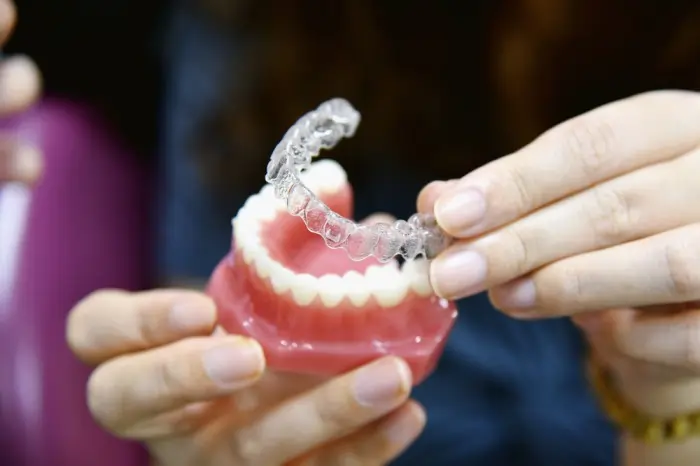
Most tray changes produce some discomfort – but not all of them, and not equally. A few things determine how each one feels.
Trays that require significant tooth movement feel more intense. Refinement trays – making tiny corrections in the final stages of treatment – often cause little to no discomfort at all. Patients who wear their aligners the prescribed 20 to 22 hours per day find tray transitions smoother. Wearing them less slows movement and makes the next tray fit tighter and feel worse.
One practical tip nearly every orthodontist recommends: insert new trays at bedtime. You sleep through hours one through eight – which is when the pressure peaks. By morning, the worst is already over. Patients who do this consistently describe their Invisalign experience very differently from those who switch trays in the middle of the day.
Where Does It Hurt? Teeth, Gums, Jaw, and Tongue
Invisalign discomfort isn’t always in the same place. Here’s what each location feels like and why.
Your Teeth
The most common sensation is a deep, dull ache in the teeth being moved most actively by the current tray. It’s pressure-based – it worsens when you bite down and eases when you’re not chewing. Hard or crunchy foods on days one and two of a new tray amplify this noticeably. Soft foods during those first two days make a real difference.
Your Gums
The plastic edge of the aligner sits against your gum line and can cause mild irritation – especially in the first few days of a new tray when the fit is tightest. This usually settles within three to four days. If gum soreness persists beyond a week or you notice a rough edge on the tray, mention it to your orthodontist at your next visit.
Your Jaw
Jaw soreness during Invisalign is less common but it does happen. As your teeth shift, the way your upper and lower teeth come together changes. Jaw muscles that are used to an old bite position have to adapt to a new one. Patients who already have jaw tension or TMJ sensitivity tend to notice this more than others.
Your Tongue
The tongue gets abraded in the first week or two of treatment. Invisalign trays have smooth plastic edges – but your tongue naturally explores anything new in your mouth, and the aligner edges can cause minor cuts and soreness on the tongue’s sides. Most patients adapt within one to two weeks. Pressing a small piece of dental wax over any sharp edge gives immediate relief.
Throat discomfort is occasionally reported, usually from increased saliva or anxiety about the appliance. It resolves within a few days and isn’t caused by the trays themselves.
Does Invisalign Hurt More Than Braces?
For most patients, Invisalign is less painful than traditional braces – but the comparison isn’t as simple as one hurting more than the other. The types of discomfort are different.
Invisalign causes pressure and dull aching during the first few days of each tray cycle. Braces cause pressure too – but they add wire irritation and bracket edges rubbing on the lips and inner cheeks. That soft tissue pain is something Invisalign users simply don’t experience.
The other big difference is eating. With Invisalign, you remove the trays to eat. So on day two of a new tray – when your teeth are most sore – you take the aligner out, eat a soft meal, and put it back in. Braces patients can’t do that. The appliance is fixed, and food-related pain is unavoidable for several days after each adjustment.
Attachments, IPR, and Eating - Do Those Hurt Too?
Getting Attachments
Attachments are small tooth-colored composite bumps bonded to certain teeth to help the aligner grip and move them more precisely. Getting them placed doesn’t hurt. The process involves etching the tooth surface, applying adhesive, and setting the composite with a curing light. No drilling, no needle, no anesthesia. Removing them at the end of treatment is also painless – a polishing instrument buffs them off in a few minutes.
IPR - Tooth Filing
IPR (interproximal reduction) is the process of gently filing between adjacent teeth to create a fraction of a millimeter of space for movement. During the procedure, most patients feel vibration and nothing more. Enamel has no nerve supply. Some people notice brief cold sensitivity in the treated area for a day or two afterward. It resolves on its own without any treatment. IPR does not damage your enamel. The amount removed – typically 0.2 to 0.5 mm per contact point – is well within the range considered safe by the American Association of Orthodontists. Your enamel thickness is not meaningfully affected by the procedure.
Eating and Removing Trays
Eating itself doesn’t hurt with Invisalign – you remove the trays for every meal and snack. But your teeth are sore on days one and two of each new tray, so hard foods during those days amplify the aching. Scrambled eggs, yogurt, soft pasta, and soup during those first two days make a noticeable difference. By day three you’re back to eating normally.
Taking the tray out for the first time can be uncomfortable when the fit is tightest. The technique matters. Start at the back molars – hook a finger under the back edge and peel outward. Don’t try to pull from the front teeth. Patients who pull from the front report more discomfort. Once you get the motion down it becomes second nature within a few days.
How to Manage the Pain (Six Steps)
These steps work. They don’t eliminate the discomfort entirely – but they make each tray change significantly more manageable.
- Insert new trays at bedtime. Sleep through the worst of it. This is the most effective single change you can make. You wake up on day two, the peak pressure has already passed, and the day is manageable.
- Take pain relief before inserting. Ibuprofen (400 mg) or acetaminophen (500 mg) taken 30 to 60 minutes before a new tray reduces peak discomfort. Don’t wait until you’re already in pain – take it proactively. If you have stomach or kidney sensitivity, use acetaminophen and follow the dosage instructions on the label.
- Eat soft foods for the first two days. You don’t need a special diet for your whole treatment. Just soften it for 48 hours per tray change. Yogurt, eggs, soup, pasta, mashed potatoes – anything that doesn’t require hard biting.
- Sip cold water throughout the day. Cold reduces local inflammation and temporarily dulls the aching. Avoid ice directly on teeth – cold sensitivity can worsen if enamel is already under stress. Room-temperature cold water is enough.
- Apply dental wax to sharp edges. If the aligner edge is cutting your tongue or irritating your gums, press a small piece of orthodontic dental wax over the spot. It’s available at any pharmacy without a prescription. It won’t affect how the aligner works.
- Use aligner chewies to seat the tray. Chewies are small soft foam cylinders you bite down on after inserting a new tray. They help the aligner seat fully and evenly against all teeth – which reduces uneven pressure points that cause extra soreness. Your orthodontist will provide them.
When to Call Your Orthodontist
Call within 1–2 days if: Pain is sharp or stabbing rather than a dull ache. One specific tooth hurts dramatically more than others. The tray doesn’t seem to fit right.
Call the same day if: Pain is severe and over-the-counter medication isn’t helping. You see a crack in the tray. An attachment has come off.
Don’t call for: Normal pressure and aching in the first few days of a new tray. Tongue soreness in week one. Mild gum irritation. These are expected.
Why Doesn't My Invisalign Hurt - Is Something Wrong?
Not necessarily. Some tray changes in a treatment series involve minor refinements that require very little force – so you feel little or nothing. That’s normal.
But if you’ve been in Invisalign for several months and haven’t felt any pressure at any tray change, it’s worth bringing up at your next orthodontist visit. No pressure at all can sometimes mean the trays aren’t seating fully against your teeth – meaning they’re not applying effective force, and your teeth may not be tracking as planned. Your orthodontist can check this quickly with a simple visual exam or a scan.
Key Takeaways
- Invisalign hurts – mildly and briefly. Expect pressure and soreness for 2 to 3 days per new tray. It fades on its own and doesn’t last the full treatment.
- The first tray is the hardest. Not because it moves teeth the most – but because the feeling is new. By tray four or five, most patients manage each cycle easily.
- Bedtime tray changes change everything. Switching to a new tray right before sleep is the most effective pain management strategy available. Pair it with ibuprofen taken 30 minutes before insertion.
MindoraPulse – Your Mental Health Hub
MindoraPulse brings you trusted insights, expert tips, and practical guidance on mental health and wellness. Explore MindoraPulse to stay informed and support your well-being.
Frequently Asked Questions
Does Invisalign hurt?
Yes – mildly. Most patients feel pressure and dull aching for 2 to 3 days after each new aligner tray is inserted. The sensation is not sharp or constant. It comes from the controlled force the tray applies to move teeth. Between tray changes, most patients feel nothing at all. Invisalign doesn’t hurt continuously – the discomfort is cyclical and temporary.
How long does Invisalign hurt?
Discomfort typically lasts 2 to 3 days after each new tray. Day one and day two are the most uncomfortable. By day four, most patients feel significantly better. By days six and seven, the soreness is usually gone entirely – until the next tray change. Over a full treatment of 6 to 18 months, the actual uncomfortable days are a small fraction of the total.
When does Invisalign hurt the most?
The first 48 hours after each new tray is inserted – and the very first tray is often the worst of the whole treatment. It’s not that the first tray moves teeth the most. It’s that the sensation is unfamiliar. By tray four or five, most patients know exactly what to expect and manage each cycle without much difficulty.
Does Invisalign hurt more than braces?
For most patients, Invisalign is less painful than traditional braces. Braces add wire irritation and bracket rubbing on soft tissue that Invisalign doesn’t have. Studies place average Invisalign pain at 2 to 3 out of 10 versus 3 to 4 out of 10 for braces. The practical advantage is that you remove Invisalign to eat – so food-related pain during sore days is avoidable.
Does every new Invisalign tray hurt?
Most tray changes produce some discomfort, but not all of them equally. Trays requiring significant movement feel more intense. Refinement trays near the end of treatment often cause little to no discomfort. Patients who wear aligners 20 to 22 hours per day as prescribed tend to find each tray transition smoother than those who wear them less consistently.
Why does my Invisalign hurt so much?
Unusually intense pain may mean the tray isn’t fitting correctly, an attachment has come loose, or a tray was skipped in the sequence. It can also mean the current tray is making a more complex movement than previous ones. If pain is sharp, worsening, or doesn’t improve after three days, contact your orthodontist. Normal Invisalign discomfort should be dull pressure – not severe or stabbing.
Does Invisalign hurt your gums, jaw, or tongue?
All three are possible. Gum irritation from the aligner edge is common in the first few days of a new tray and usually resolves on its own. Jaw soreness can occur as your bite shifts and jaw muscles adapt. Tongue soreness and minor cuts are common in the first week of treatment as the tongue adjusts to the plastic edges. Dental wax applied to any sharp spot provides immediate relief.
Does getting Invisalign attachments hurt?
No. Placing attachments is painless – no drilling, no needle. The process bonds small composite bumps to the tooth surface using adhesive and a curing light. Removing them at the end of treatment is also painless. IPR, or minor tooth filing between teeth, causes no pain during the procedure – some patients notice brief cold sensitivity for one to two days afterward, which resolves on its own.
Why doesn't my Invisalign hurt - is that normal?
Some tray changes involve minor corrections that require little force, so no discomfort is felt. That’s completely normal. But if you’ve gone through multiple months of treatment with zero pressure sensation at any point, bring it up with your orthodontist. It may indicate the trays aren’t seating fully against the teeth – meaning they may not be applying effective force or tracking as planned.
What does current guidance say about managing Invisalign pain?
According to the American Association of Orthodontists, mild soreness after switching clear aligner trays is common and indicates that teeth are gradually moving into their new positions. Orthodontists often recommend over-the-counter pain relievers such as Ibuprofen or Acetaminophen to manage temporary discomfort. Patients are typically advised to wear aligners 20–22 hours per day and change trays as directed to ensure proper tooth movement. If pain becomes severe or persists for several days, patients should contact their orthodontist for evaluation.